
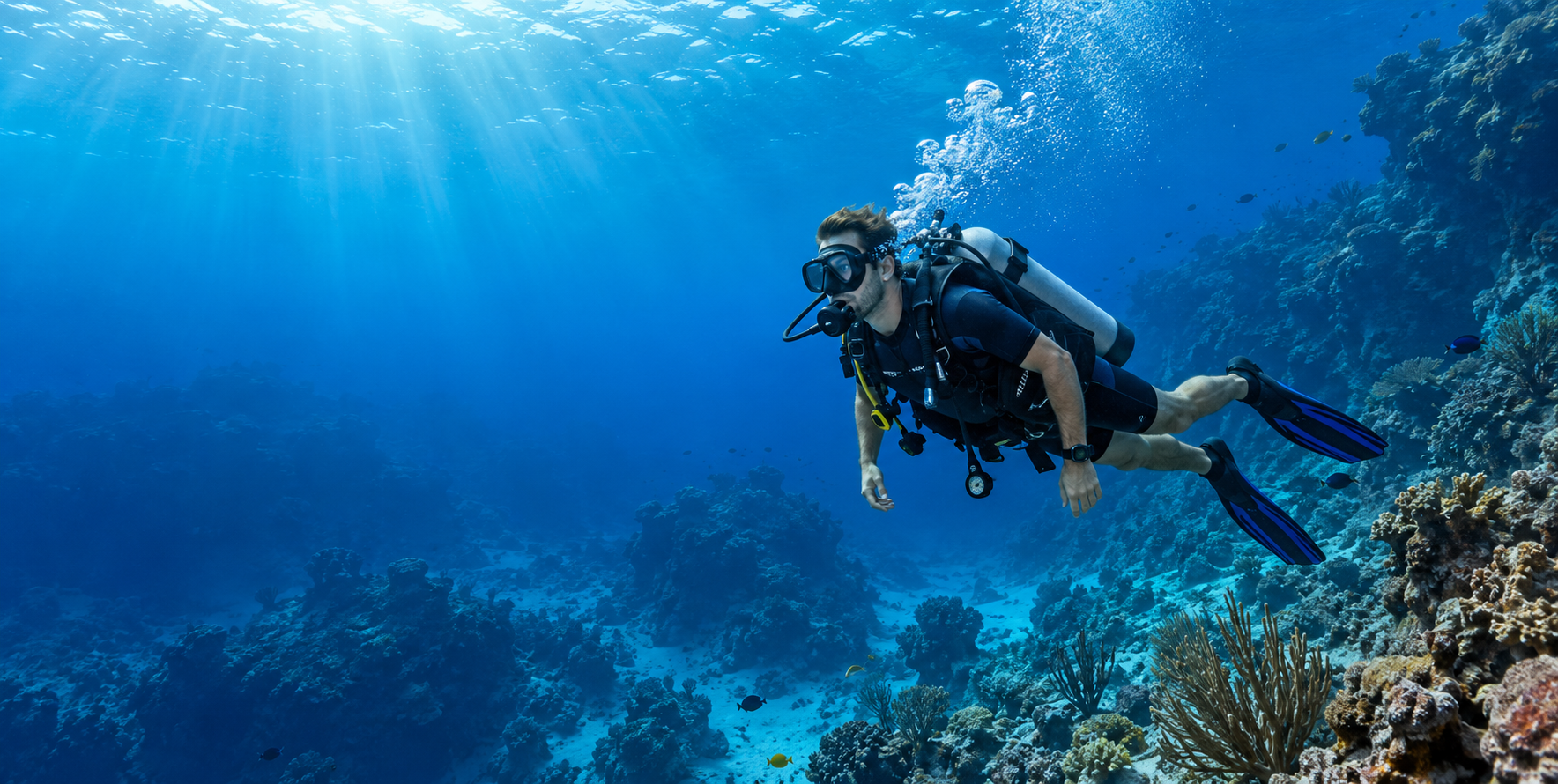
Diving in St. John, USVI, reveals an underwater landscape of coral reefs, seagrass beds, steep walls, rock formations and sheltered channels. Much of the water and seafloor surrounding the island falls within Virgin Islands National Park or Virgin Islands Coral Reef National Monument, helping protect important marine habitats. With sites suited to different certification levels, St. John offers rewarding experiences for first-time participants, student divers and experienced underwater explorers.
The island’s reefs support colourful corals, sponges, sea fans and an impressive variety of Caribbean marine life. Depending on the location and conditions, divers may encounter parrotfish, angelfish, triggerfish, tarpon, moray eels, octopuses, stingrays, sea turtles and nurse sharks. Eagle rays, reef sharks and other larger animals may occasionally pass through deeper or more exposed sites, although wildlife sightings can never be guaranteed.
Popular St. John dive sites include Congo Cay and Grass Cay, which provide options for beginners and divers completing certification training. Congo Cay features shallow sand channels as well as deeper reefs, rock spires and coral-covered walls. Grass Cay combines sand flats, coral heads, seagrass beds and a sloping reef across several dive areas. Site selection depends on the diver’s experience, weather, currents and the route chosen by the instructor or divemaster.
Experienced divers can explore more challenging St. John scuba diving locations such as Eagle Shoal and Carval Rock. Eagle Shoal is known for an impressive coral formation and an open underwater chamber called The Cathedral. Its remote and exposed position makes it better suited to confident, experienced divers. Carval Rock features steep underwater formations and swim-throughs, but strong currents can occur in the surrounding area. Any cavern, tunnel or overhead environment should only be entered when it falls within the diver’s training and the plan established by a qualified guide.
St. John dive operators offer a range of guided experiences, including one-tank and two-tank boat trips, reef dives, night dives and private scuba charters. Some excursions are designed for certified divers, while others accommodate students and first-time participants under close professional supervision. Since many sites around St. John are accessed by boat, departure time, vessel capacity, travel duration and available shade or seating should be considered when comparing tours.
Travelers who have never tried scuba diving can enquire about supervised introductory programmes. These experiences generally include basic theory, equipment familiarisation, essential safety skills and a shallow guided dive. Completing an introductory session does not provide a permanent scuba certification. Visitors who want to continue diving independently can compare recognised open-water certification courses that combine academic learning, confined-water practice and open-water training dives.
Non-certified travelers may also find SNUBA experiences around St. John. SNUBA combines elements of snorkelling and scuba by supplying air through a hose connected to equipment floating at the surface. It does not require a scuba certification, but participants still receive instruction and remain with a guide. Age, swimming ability, health and operating requirements should be confirmed directly with the provider before booking.
Certified divers should bring proof of certification and provide accurate information about their training and recent experience. Dive centres may recommend a refresher session for anyone who has not dived for an extended period. Advanced sites, deeper reefs, strong-current dives, night excursions and overhead environments may require additional certification or documented experience. The final dive location can change according to group ability, visibility, wind, waves and current conditions.
When comparing St. John diving tours, check what is included in the listed price. Ask whether tanks, weights, masks, fins, regulators, buoyancy-control devices, exposure protection and dive computers are provided. Travelers should also confirm marine fees, transportation, refreshments, equipment-rental charges, underwater photography, cancellation policies and weather-related procedures. Private charters can offer a more personalised schedule, but the itinerary will still depend on safe operating conditions and protected-area regulations.
Scuba diving requires careful attention to health and safety. Complete medical questionnaires honestly and disclose respiratory, cardiac, ear, sinus or other conditions that may affect diving. Always remain within personal training and depth limits, monitor air and dive-computer information, follow the buddy system and comply with the guide’s instructions. Divers should also allow the appropriate surface interval before flying or travelling to altitude, following the recommendations of their training organisation and dive operator.
Responsible diving is particularly important around St. John’s protected marine environments. Maintain good buoyancy and keep fins, gauges and other equipment away from coral. Do not touch, chase or feed wildlife, and never remove shells, coral or marine organisms. Boats should use the correct National Park Service moorings instead of anchoring on sensitive reefs, while divers must follow all applicable park and monument regulations.
Conditions around St. John can vary significantly between sheltered reefs and exposed offshore sites. Wind, currents, rainfall and sea state may affect visibility and determine whether a planned site is suitable. Booking early is helpful during popular travel periods, but visitors should remain flexible if an operator changes the itinerary for safety reasons. Morning and afternoon experiences, night dives and private charters may have different schedules and availability.
From beginner-friendly reefs to dramatic chambers, walls and current-swept rock formations, scuba diving in St. John provides many ways to experience the natural beauty of the U.S. Virgin Islands. Compare reputable St. John dive centres, guided diving tours, equipment rentals and certification programmes before your visit. Choosing an experience suited to your training while respecting the protected marine environment will help create a safe, memorable and rewarding Caribbean diving adventure.
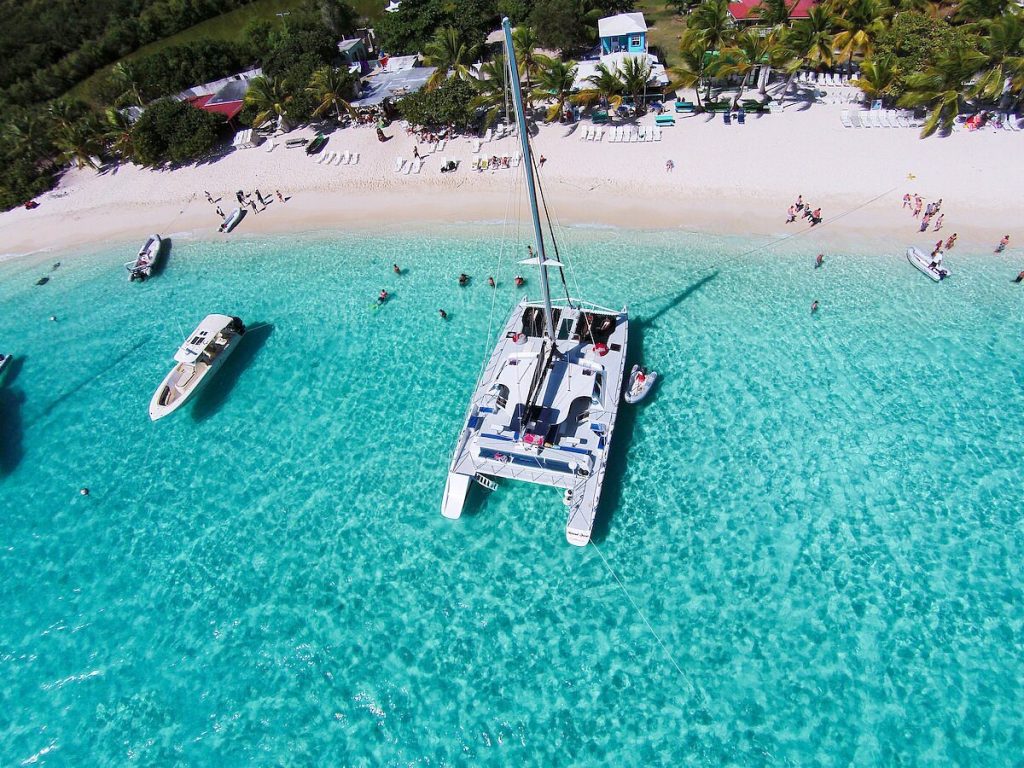
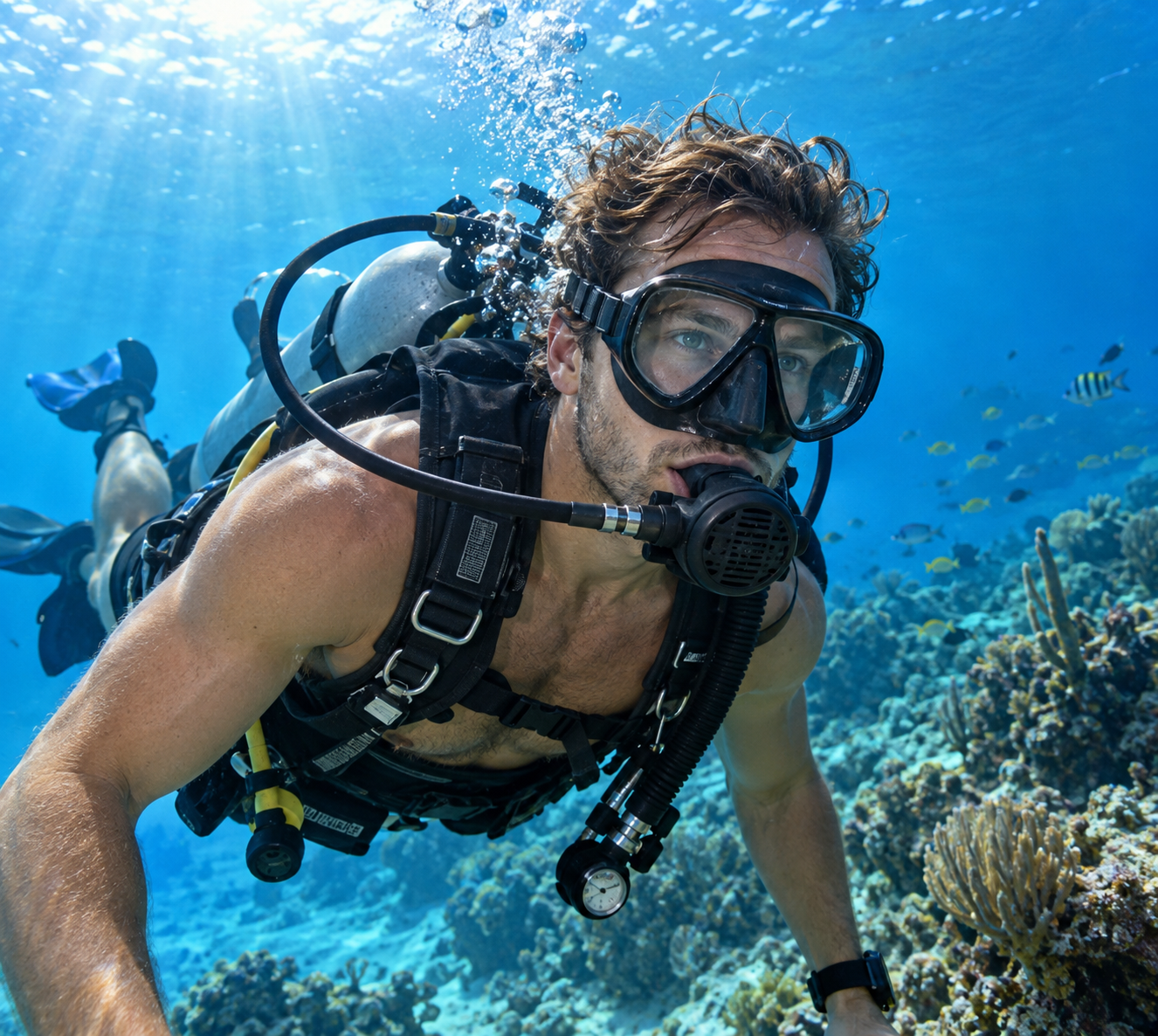

Much of the water surrounding St. John is protected by Virgin Islands National Park and Virgin Islands Coral Reef National Monument. These marine environments support coral, sponges, sea fans and diverse aquatic wildlife. Depending on the site and conditions, divers may encounter parrotfish, angelfish, triggerfish, octopuses, stingrays, sea turtles, nurse sharks and schools of tarpon. Sightings vary naturally and are never guaranteed.
Beginner-friendly St. John dive sites include areas around Congo Cay and Grass Cay, where guides can select shallow reefs, sand channels and gentle slopes suited to training. Experienced divers can explore Eagle Shoal, known for its striking underwater chamber called The Cathedral, or Carval Rock, which features steep formations and exciting swim-throughs. Strong currents and exposed conditions make some locations appropriate only for suitably trained divers.
St. John dive centres offer one-tank and two-tank boat excursions, reef dives, night dives, private charters and scuba certification courses. First-time participants can enquire about supervised introductory programmes, while certified divers can choose trips suited to their qualification and recent experience. Equipment rental may include tanks, weights, regulators, buoyancy-control devices, masks, fins and exposure protection, although inclusions should be confirmed before booking.
Protected marine habitats, warm Caribbean water and varied underwater terrain make diving in St. John, USVI, an unforgettable island experience. Divers can explore coral reefs, seagrass beds, sand channels, rock formations, walls and dramatic swim-throughs. Local dive centres accommodate everyone from first-time participants and certification students to experienced divers seeking deeper, more challenging sites.
Reputable St. John diving tours provide safety briefings, qualified guides and dive plans based on certification level, weather and sea conditions. Divers should complete medical forms honestly, remain within personal depth and training limits, follow the buddy system and allow an appropriate interval before flying. Good buoyancy, careful fin control and respect for National Park regulations help protect coral and marine life from accidental damage.
Explore trusted St. John dive centres, guided reef trips, private scuba charters, equipment rentals and certification programmes. Compare dive requirements, trip duration, departure points, gear inclusions and available sites to plan a safe, responsible and memorable scuba diving experience in St. John, USVI.
Yes. Local operators offer guided reef dives from St. John. Confirm the departure point and whether the trip is appropriate for your certification level and recent experience.