
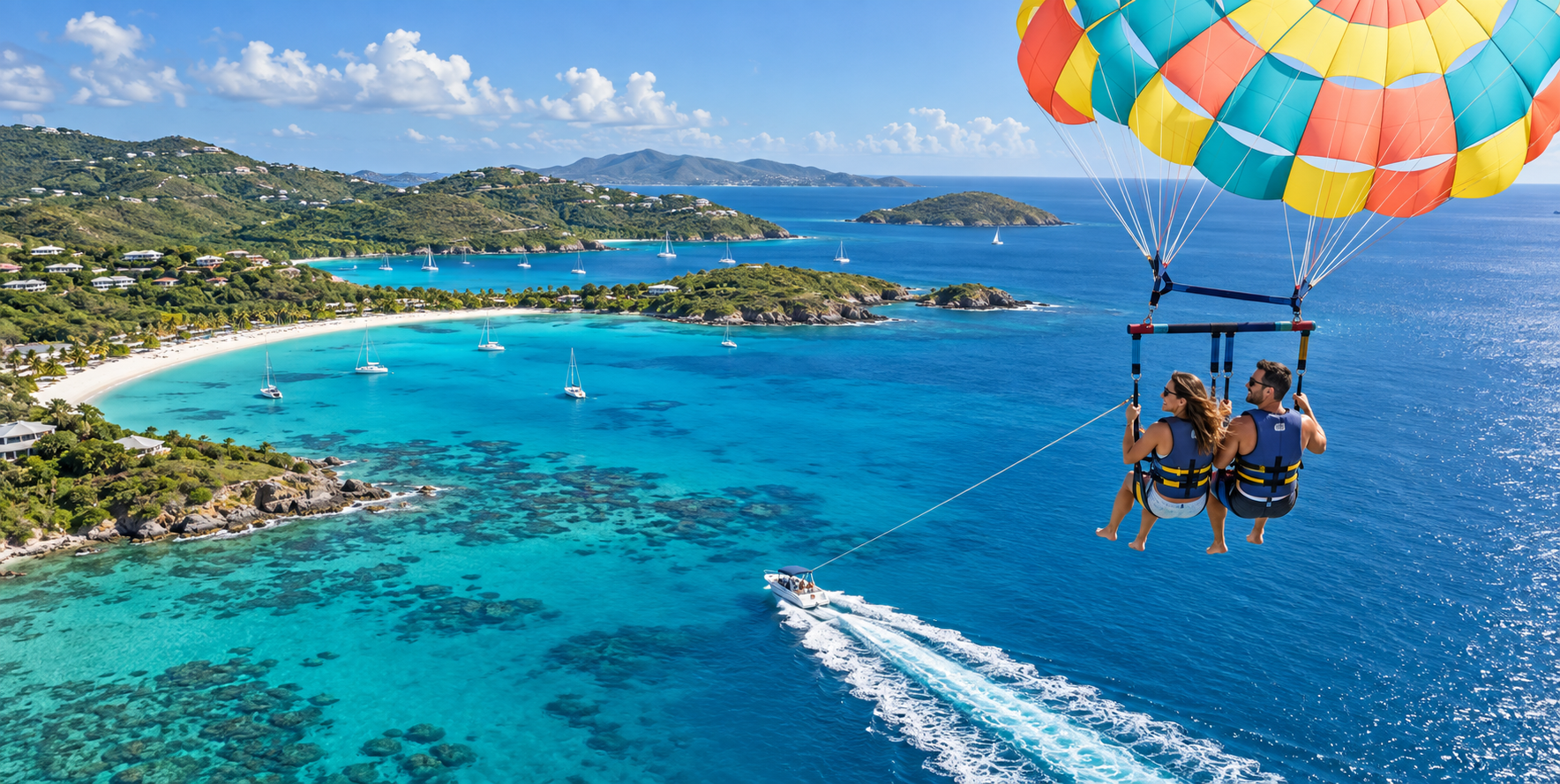
Parasailing in St. John, USVI, offers an unforgettable opportunity to admire the island’s green hills, sheltered bays and surrounding Caribbean waters from above. Towed behind a specially equipped boat while secured beneath a parasail canopy, riders gradually rise into the air and enjoy panoramic views that cannot be experienced from the beach. The activity blends scenic sightseeing with gentle excitement, making it suitable for adventurous couples, families and first-time flyers.
The waters between St. John, St. Thomas and the surrounding cays create a remarkable setting for a USVI parasailing adventure. Depending on the route, departure point and visibility, riders may see sections of St. John’s coastline, nearby islands, boats crossing Pillsbury Sound and the bright color changes of the shallow and deep Caribbean Sea. Every flight is affected by weather and operating conditions, so the exact route and views may vary.
A typical St. John parasailing tour begins with passengers meeting the operator at an arranged pickup point and boarding a dedicated parasailing vessel. At least one current provider schedules St. John pickups at Cruz Bay’s National Park Dock, but arrangements must be confirmed directly in advance. Travelers should never assume that walk-up departures are available and should verify the exact meeting location, check-in time and return estimate when reserving.
Before takeoff, the crew explains the harness, life jacket, hand signals and expected flight procedure. Riders are secured to the parasail equipment and gradually lifted using the boat’s controlled tow and winch system. The crew manages the ascent, flight distance and return, meaning participants do not need to steer the parasail. Procedures can differ between vessels, so following the captain’s instructions is essential throughout the trip.
Solo, tandem and multi-rider flights may be offered, although the available format depends on the operator’s equipment, combined passenger weight, wind and the captain’s safety assessment. Couples and family members often choose to fly together, while solo flights may be possible when conditions allow. A particular configuration cannot always be guaranteed in advance because the crew may need to adjust rider combinations on the day.
The overall excursion includes more than the time spent in the air. Passengers may remain aboard while the crew prepares the equipment and other guests complete their flights. Travelers should therefore ask about both the estimated airborne time and the total trip duration. Private parasailing charters may also be available for families, celebrations or groups seeking a more personalized boat experience.
No previous parasailing experience is generally required, but riders must be able to understand instructions and wear the safety equipment properly. Age limits, minimum and maximum weights, combined-weight rules and adult-accompaniment requirements vary between providers. Observer seats may be available for family members who want to join the boat ride without flying, but parasailers are usually given booking priority when vessel space is limited.
Travelers with mobility limitations, pregnancy, recent surgery or significant heart, back, neck or balance concerns should contact the operator before reserving. Boarding may involve stepping between a dock and moving vessel, while the boat ride itself can become bumpy when conditions change. Guests should disclose relevant concerns honestly and seek appropriate medical advice when uncertain about participation.
Weather is one of the most important considerations when planning parasailing in St. John. Wind strength, wind direction, rain, visibility and sea conditions determine whether a flight can operate safely. The captain may change the rider arrangement, delay departure or cancel the trip even if the weather appears pleasant from shore. Booking earlier in the vacation allows more flexibility if the experience needs to be rescheduled.
Comfortable swimwear or quick-drying clothing is usually appropriate for a Caribbean parasailing excursion. Riders should use sun protection, bring a towel and wear sunglasses only if they can be secured with a strap. Loose hats, jewelry and unsecured valuables can be lost during the boat ride or flight. Phones and personal cameras should only be carried when permitted by the operator and protected against water.
Some trips may include the option of a gentle dip near the water, while others may keep riders dry throughout the flight. This depends on the provider, captain and conditions and should be discussed before takeoff. Photo or video packages may also be available for an additional charge, giving travelers a safer way to document the experience without carrying unsecured equipment in the air.
Reservation policies, deposits, cancellation deadlines and weather-refund terms differ between operators. Visitors should review these details before paying and confirm whether the advertised price includes taxes, transportation, photographs, observer seats and gratuities. Travelers with ferry, cruise or flight connections should leave a generous time buffer in case boarding or weather delays extend the excursion.
Responsible behavior is important during every St. John watersports activity. Guests should keep all waste aboard the vessel, avoid throwing objects into the sea and follow crew instructions around wildlife and protected waters. Choosing an established operator with clear safety procedures, well-maintained equipment and transparent booking policies can contribute to a more comfortable experience.
With coordinated pickup, suitable weather and professional guidance, parasailing in St. John provides a memorable new perspective on the US Virgin Islands. From the gradual rise above the boat to the sweeping views across the Caribbean, the experience can become a distinctive highlight of an island vacation. Booking ahead and confirming every logistical detail will help travelers arrive prepared and ready to enjoy the flight.
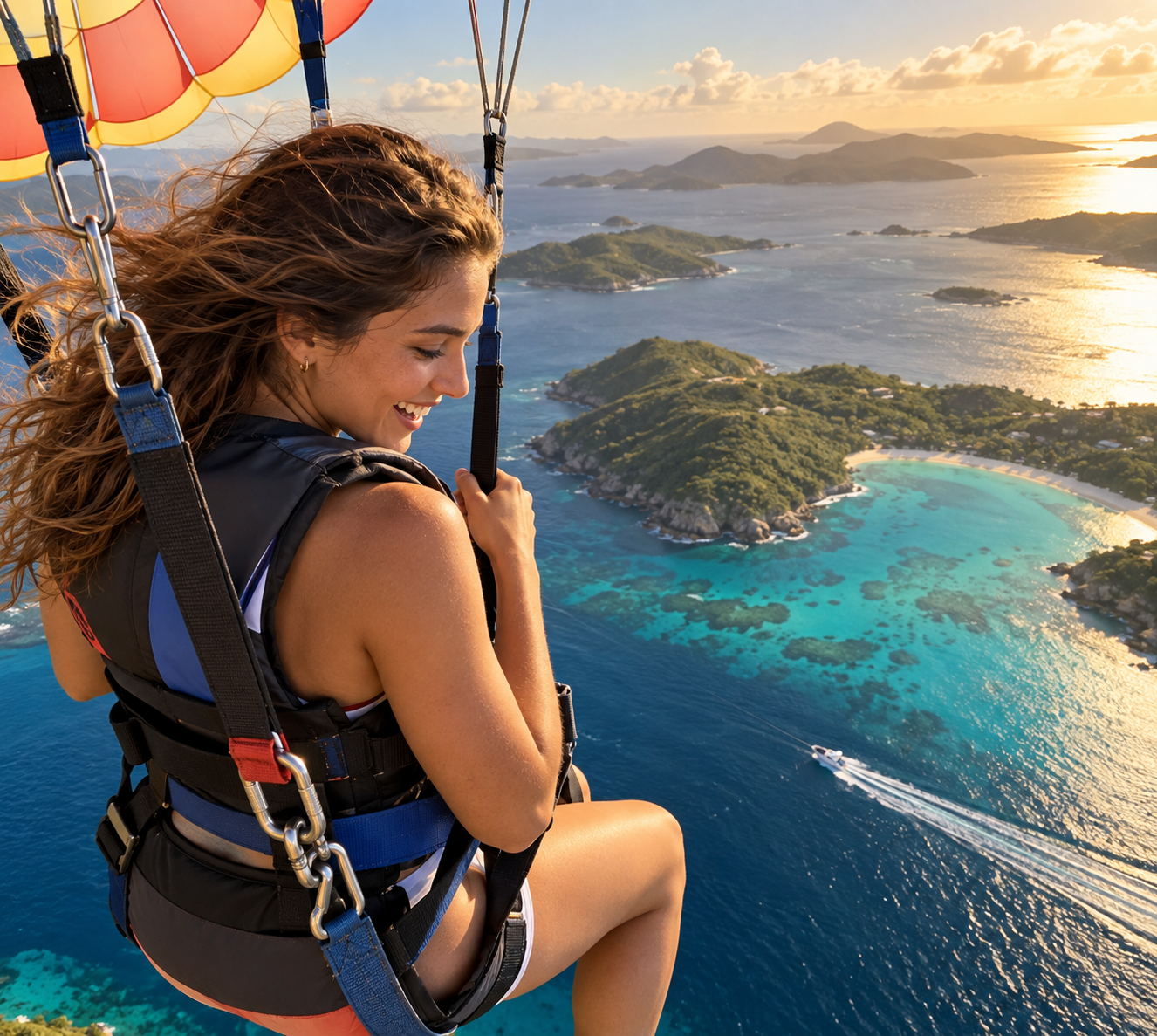
A St. John parasailing tour provides a perspective that cannot be experienced from the beach. Depending on the route, visibility and sea conditions, riders may see sections of the St. John coastline, surrounding cays, Pillsbury Sound and neighboring islands.

Some St. John parasailing experiences require travelers to contact the operator directly and arrange pickup at Cruz Bay’s National Park Dock. Advance planning is important because departures may not operate as walk-up beach activities, and vessel space can be limited.

Solo, tandem and multi-rider flights may be available, although the final arrangement depends on combined passenger weight, wind conditions and the captain’s safety assessment. Private trips and observer seats may also be offered for families or groups, subject to vessel capacity.
Parasailing in St. John, USVI, combines Caribbean adventure with remarkable aerial views of the island’s green hills, secluded bays and neighboring cays. Riders are gradually lifted above the sea while secured beneath a parasail canopy and towed by a specially equipped boat. The experience can appeal to couples, families and first-time flyers searching for a memorable way to see the US Virgin Islands.
The crew should provide a safety briefing, properly fit each rider with a life jacket and harness and explain the takeoff and landing process. Age limits, weight ranges, mobility requirements and health restrictions vary between providers and should be reviewed before reserving. Wind, rain, visibility and sea conditions can also cause changes, delays or cancellations, so booking earlier in the vacation provides more flexibility if the experience must be rescheduled.
Compare trusted St. John parasailing tours by pickup arrangements, flight format, group capacity, observer policies and available photo or video packages. Travelers should also review deposits, cancellation terms, weather-refund policies and included charges before confirming. With professional guidance, suitable weather and careful planning, parasailing in St. John can provide an unforgettable bird’s-eye view of the Caribbean.